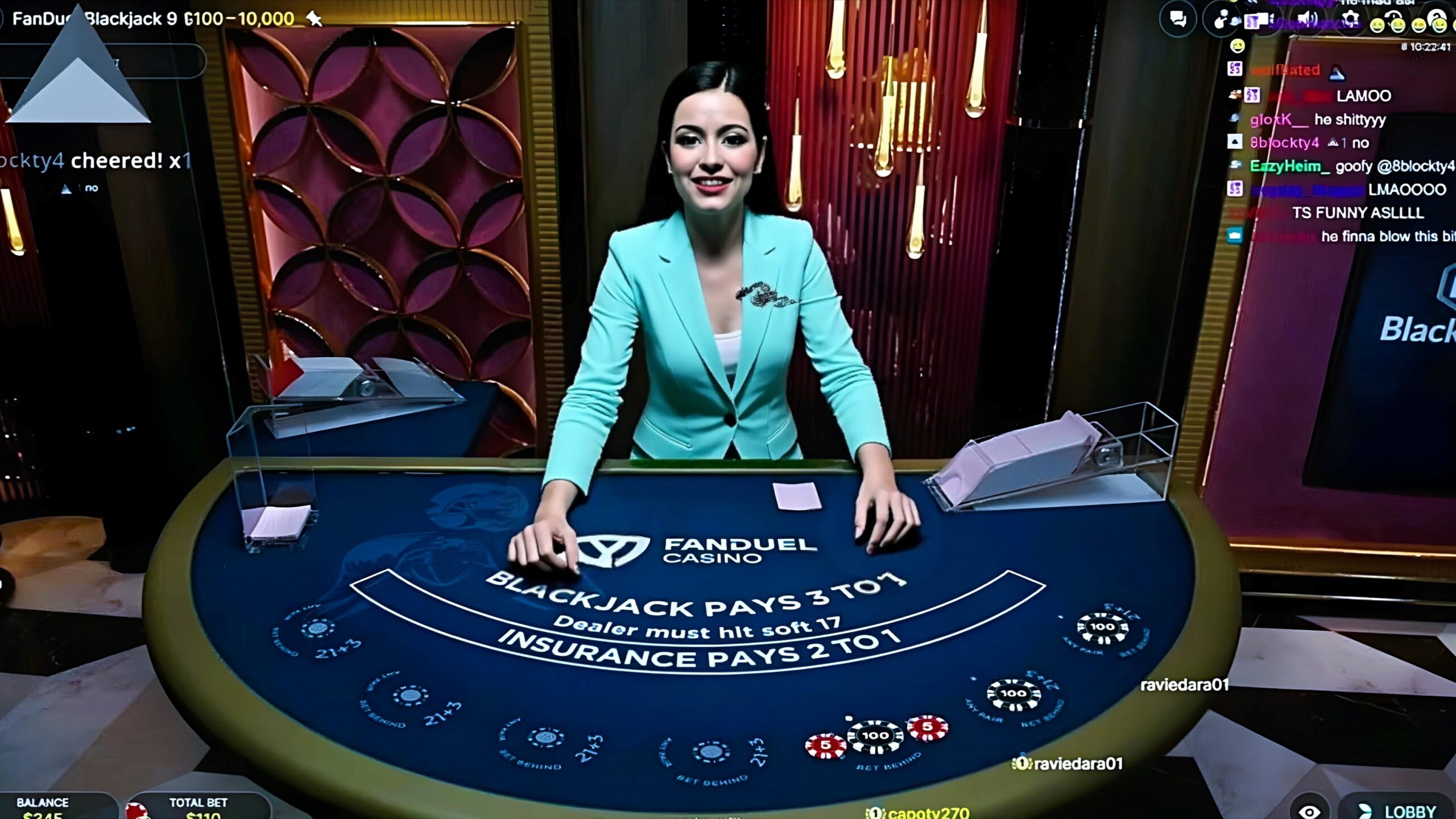
Want the thrill of a casino without leaving your chair? Side bets are the glittery fireworks that make a simple blackjack hand feel like a mini lottery ticket — but they come with a price. This deep-dive unpacks the most popular live blackjack side bets, how they work, their math (yes — the boring-but-crucial numbers), and a step-by-step practical approach for Indian players who want to enjoy them smarter and safer.
Why this guide — and why it matters now
If you are diving into live blackjack online, side bets are impossible to ignore. Games like Perfect Pairs, 21+3, Royal Match, Lucky Ladies, and Super Sevens are practically everywhere in modern live dealer lobbies. They catch your eye with flashy graphics and the promise of big wins, making even a simple hand feel like a high-stakes moment. For many players, the thrill of landing a rare combination can be addictive, turning a routine game into something memorable. The allure is real, but so is the cost. Side bets carry significantly higher house edges than standard blackjack, meaning that while you might hit a big payout occasionally, the odds are consistently stacked against you over time.
Understanding how these side bets work is crucial for anyone serious about managing their bankroll. Unlike the base game, where strategic decisions can reduce the house edge, side bets are mostly luck-based. You can’t count cards or make nuanced strategic choices to tip the odds in your favor. This means that while side bets can be entertaining, they are financially riskier, and a few impulsive rounds can quickly erode your session funds. Treating them as purely optional fun rather than a path to profit is the smartest approach for any player.
For Indian players, the landscape is becoming even more complex. A recent legal update, dated August 22, 2025, has significant implications. Parliament passed a major online gaming bill that bans real-money gaming and introduces stricter regulations for operators in India. This legislation could impact the availability of live dealer casinos for Indian customers, as platforms may need to adjust their services, payment options, or even withdraw entirely from the Indian market. Players need to be aware of these developments before committing real money to any live blackjack side bet.
Staying informed is key to both enjoyment and safety. Checking local sources, understanding the legality of the platforms you use, and being aware of any restrictions on payment methods can prevent unpleasant surprises. While side bets can inject excitement into your game, ignoring the legal and financial realities can turn a fun experience into a costly one. This guide aims to provide you with the knowledge to navigate side bets responsibly, enjoy the thrill, and protect your bankroll from unnecessary risk.
What are side bets? (short and sweet)
| Side Bet | What it Bets On | Example Winning Pattern | Typical Payout Range | Risk/House Edge |
| Perfect Pairs | Player’s first two cards form a pair | Two Queens of Hearts | 5:1 to 25:1 depending on pair type | High; often 8–12% edge |
| 21+3 | Player’s first two cards + dealer upcard form a poker hand | Three of a kind, flush, straight | 3:1 to 30:1 depending on hand | Moderate to high; 3–13% edge |
| Royal Match | First two cards are suited | King and Queen of Spades | 5:2 to 100:1 depending on table rules | Moderate; typically 3–4% edge |
| Lucky Ladies | First two cards total 20 or specific queen combos | Queens of Hearts pair | 4:1 to jackpot-level | Very high; 15–20% edge or more |
| Super Sevens | Player gets one or more sevens in first three cards | Triple suited sevens | 5:1 to 1000:1 on rare hands | High; extremely volatile |
Why do casinos love side bets — and you should be cautious?
Side bets are a fascinating part of live blackjack, but they come with a clear financial catch. Casinos are big fans of them because side bets are high-margin wagers — they pay impressively for rare outcomes, but the odds are consistently stacked in the house’s favor. For players, they inject excitement and the potential for a massive payout with just a small stake, making each hand feel more intense and rewarding. However, repeated play on these bets can quickly drain your bankroll if you aren’t careful. Below is a detailed breakdown of why casinos love side bets and why you should approach them with caution:
- Side bets are high-margin games for casinos, meaning operators earn more profit per hand compared to standard blackjack.
- They attract attention with flashy graphics, animations, and large potential payouts, increasing player engagement.
- The odds of winning side bets are significantly lower than base blackjack, creating a consistent long-term advantage for the house.
- Players often overestimate their chances due to the rare but large wins that are visually and emotionally impactful.
- Many side bets have a house edge ranging from moderate to extremely high, often double or triple that of standard blackjack.
- Side bets can lead to impulsive betting, especially after near-misses or small wins, which is a psychological trap for players.
- The flashy advertising of “jackpot-style payouts” can make players feel they are closer to winning big than they actually are.
- Because side bets operate independently of the main hand, winning the base blackjack hand does not offset losses on the side bet.
- Some side bets are designed purely for entertainment rather than strategy, meaning skill or knowledge doesn’t improve odds.
- Frequent participation in side bets can erode the bankroll faster than anticipated, especially if stakes increase after losses.
- Side bets exploit behavioral tendencies like risk-seeking for small chances of big wins, keeping players engaged longer.
- Understanding the pay table is crucial; small changes in payouts dramatically affect the house edge.
- Players often treat side bets as a “shortcut” to winning big, ignoring that the probability of hitting those rare combinations is very low.
- Side bets provide variety and excitement but should never be relied upon for consistent profit or long-term strategy.
- Responsible bankroll management is essential when engaging in side bets to prevent them from becoming a financial trap.
Popular live blackjack side bets — rules, typical payouts, and what the math says
Live blackjack side bets add an extra layer of excitement to the game, and understanding the most common ones can help you make smarter decisions at the table. One of the most popular side bets is Perfect Pairs, which focuses on your first two cards forming a pair. The appeal is simple: if your first two cards match in rank, color, or suit, you can win extra payouts on top of your regular blackjack bet. The thrill comes from the rare possibility of hitting a perfect pair, which can pay up to 25:1, depending on the casino’s pay table. Mixed pairs and colored pairs offer smaller, more frequent payouts, creating a balance between risk and reward.
The payouts for Perfect Pairs vary widely across operators, making it essential to check the pay table before placing a bet. For example, a mixed pair might pay 1:1, a colored pair could pay 4:1, and a perfect pair may go as high as 25:1. These differences are not just cosmetic — even a slight reduction in payout dramatically increases the house edge, affecting your long-term expectation. It’s the kind of detail that can turn what looks like an attractive side bet into a costly trap if ignored.
From a mathematical perspective, Perfect Pairs can have a wide range of house edges depending on the number of decks and the exact payout structure. Single-deck tables may offer slightly better odds, while eight-deck implementations are much less favorable. In practical terms, an eight-deck table with common pay tables can show a house edge exceeding 8%, meaning that for every 100 units wagered, the expected loss could be 8 units. This demonstrates why checking pay tables and understanding deck counts is critical before committing money.
Ultimately, while Perfect Pairs can provide a burst of excitement and occasional big payouts, the odds are stacked against the player over time. These side bets are designed more for entertainment than strategic advantage. By recognizing how the rules, payouts, and mathematical expectations interact, players can enjoy the thrill responsibly, placing smaller stakes on side bets while maintaining control over their overall bankroll.
Royal Match
| Side Bet | What it Bets On | Example Winning Hand | Typical Payout Range | House Edge / Math Notes |
| Royal Match | Player’s first two cards are suited; extra payout for face cards | King and Queen of Spades | Suited match: 5:2; Royal Match (face cards same suit): 25:1 or up to 100:1 | House edge varies by pay table; practical tables show ~3–4%, some tables higher; always check exact operator table |
| Non-Royal Suited Match | Any two cards of the same suit that are not face cards | 5♠ and 8♠ | 2:1 to 5:2 depending on table | Edge lower than Royal Match but still house-favored |
| Royal Face Match | Both cards are face cards of same suit (Royal Match) | J♠ and Q♠ | 25:1 to 100:1 depending on variant | Edge can be favorable on generous tables (~3–4%) but increases significantly on stricter payouts |
| Operator Variants | Some casinos tweak payouts for excitement | Adjusted tables offering bonuses | 10:1 to 100:1 for special conditions | Always read pay table; small changes affect long-term expectation |
| Deck Dependence | Number of decks affects probability | 6-deck vs 8-deck tables | Probability slightly higher in fewer decks | House edge slightly improves in single/few deck games, worsens in multi-deck |
Lucky Ladies
Lucky Ladies is one of the most thrilling live blackjack side bets, known for its potential big payouts but also for its high house edge. It generally focuses on your first two cards totaling 20 or specific queen combinations, with some tables offering massive jackpots for the rare scenario where your two Queens of Hearts align with a dealer blackjack. While the excitement and flashy payouts are tempting, the mathematical reality is that Lucky Ladies is a costly bet over the long term. Understanding the risks, payouts, and odds is essential for any player who wants to enjoy this side bet responsibly.
- Lucky Ladies bets primarily on the first two player cards totaling 20.
- Some variations focus specifically on Queen combinations, such as any pair of queens or the Queens of Hearts.
- Certain tables offer progressive jackpots if the player’s Queens of Hearts pair coincides with the dealer achieving blackjack.
- Small payouts are awarded for more common scenarios, such as any combination totaling 20, providing frequent but modest wins.
- Larger payouts or jackpots occur only under rare conditions, such as the Queens of Hearts plus dealer blackjack combination.
- The exact payouts vary by casino, with some tables offering minor payouts like 4:1 for any 20, and extreme jackpots reaching hundreds or even thousands-to-one for ultra-rare hands.
- House edges for Lucky Ladies are typically very high, ranging from the high teens into the 20%+ range on many standard pay tables.
- More generous tables with slightly lower payouts for jackpots may reduce the house edge to the low teens, but these are less common.
- Because of its high house edge, Lucky Ladies is considered one of the most expensive side bets for players in the long run.
- The excitement factor is the primary draw, rather than any realistic expectation of profit.
- Frequent play can quickly erode your bankroll if stakes are not carefully managed.
- Ideal approach: treat Lucky Ladies as an entertainment bet, placing small wagers relative to your overall session bankroll.
- Always check the pay table before playing; small differences in payout dramatically change the long-term expectation.
- Recognize the psychological lure of chasing jackpots and avoid increasing stakes after near-misses.
- Using Lucky Ladies responsibly means enjoying the thrill without expecting consistent returns.
Super Sevens / Crazy Sevens
Super Sevens, sometimes called Crazy Sevens, is a live blackjack side bet that draws attention with its fast-paced excitement and the potential for massive payouts. The bet focuses on the occurrence of sevens in your first one to three cards, with increasing rewards for consecutive sevens. A single seven might trigger a modest payout, while two sevens in a row increase the reward, and hitting three sevens—especially if they are suited—can lead to a spectacular payout. This escalating structure makes the bet visually and emotionally engaging, as each card has the potential to dramatically change the outcome.
The payout structure for Super Sevens is designed to escalate quickly with rarity. A single seven may pay small multiples of your wager, but two sevens typically offer higher returns, and the rare triple seven, particularly if suited, can reach payouts that seem almost too good to be true. This potential for enormous wins is what draws players to the bet, creating a sense of anticipation with each dealt card. However, the rarity of hitting multiple sevens means that the majority of wagers will result in losses over time, reinforcing the high-risk nature of this side bet.
Mathematically, the house edge on Super Sevens varies significantly depending on the number of decks used and the casino’s specific pay table. Single-deck games may offer slightly improved odds, but most live dealer implementations use multiple decks, increasing the probability of loss. Even with occasional large payouts, the expected value remains negative for the player. Many common versions have steep house edges, sometimes exceeding 10–15%, meaning the average player can expect to lose a significant portion of wagers if playing frequently.
Ultimately, Super Sevens is designed as a high-risk, high-reward form of entertainment rather than a sustainable winning strategy. The excitement comes from the rare moments of big payouts, which can be visually and emotionally thrilling, but the mathematical reality ensures the house maintains a strong advantage over time. Players who enjoy the rush of uncertainty can indulge with small bets, but it is crucial to treat this side bet as an occasional thrill rather than a dependable source of profit.